
Procedures
All‑on‑X Implant Surgery
A fixed full‑arch solution supported by dental implants, planned with modern 3D imaging and coordinated restorative care.
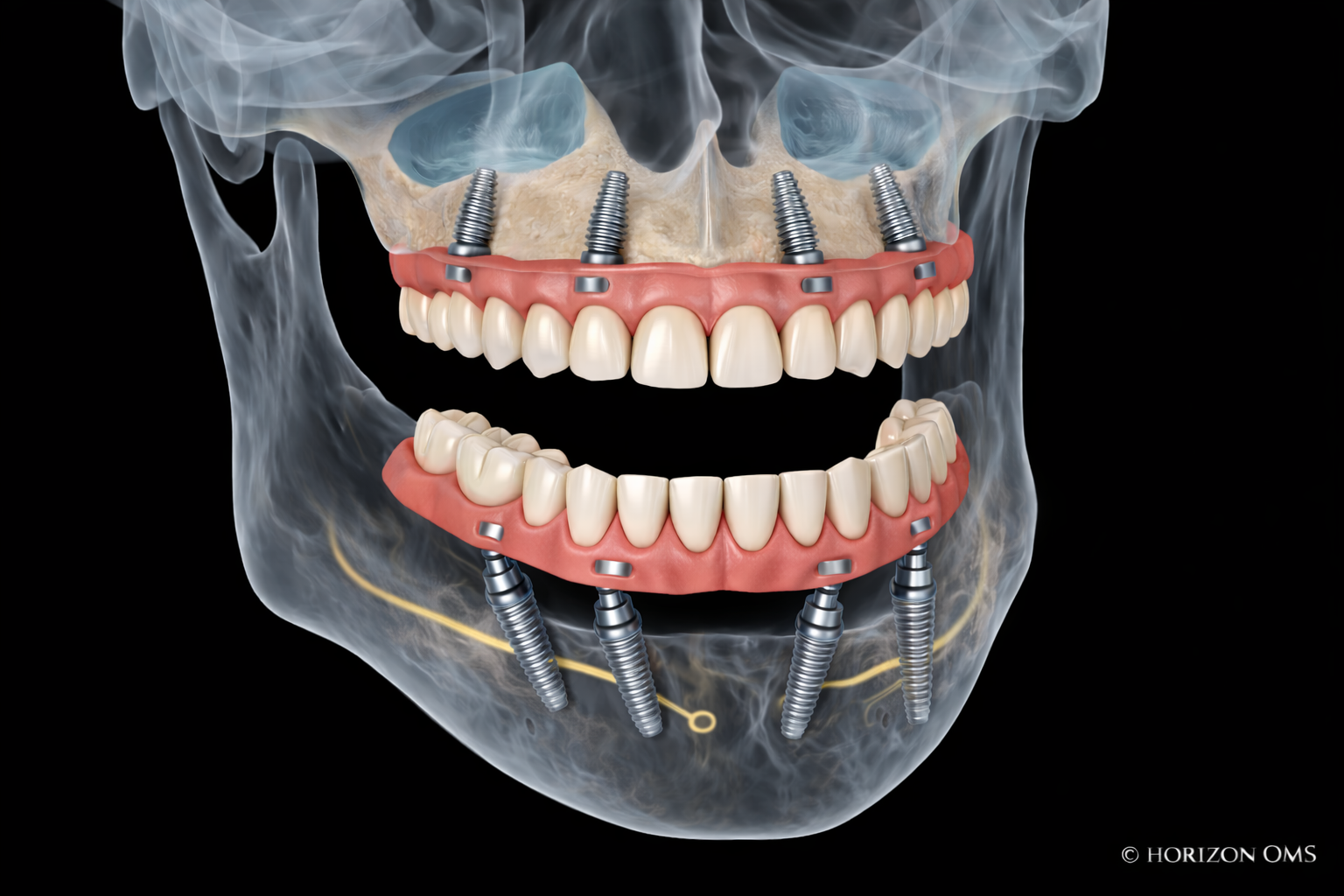
What is All‑on‑X?
All‑on‑X is a full‑arch treatment that replaces an entire upper or lower set of teeth using a fixed bridge supported by dental implants. “X” refers to the number of implants used—commonly 4–6—based on your anatomy, bone quality, and restorative plan.
Who is it for?
- Patients with multiple failing teeth or advanced decay/gum disease
- Patients who wear dentures and want a more stable, fixed option
- Patients with significant bone loss who may still be candidates with advanced planning
Full-Arch Smile Transformations
Before-and-after full-arch implant cases surgically treated by Dr. Al-Qudsi. Temporary and final prostheses (“teeth”) are designed, made, and delivered in collaboration with trusted local restoring dentists. Don’t have a dentist? We can recommend excellent restorative colleagues we work with to help keep treatment seamless from surgery through final teeth. Individual results vary.
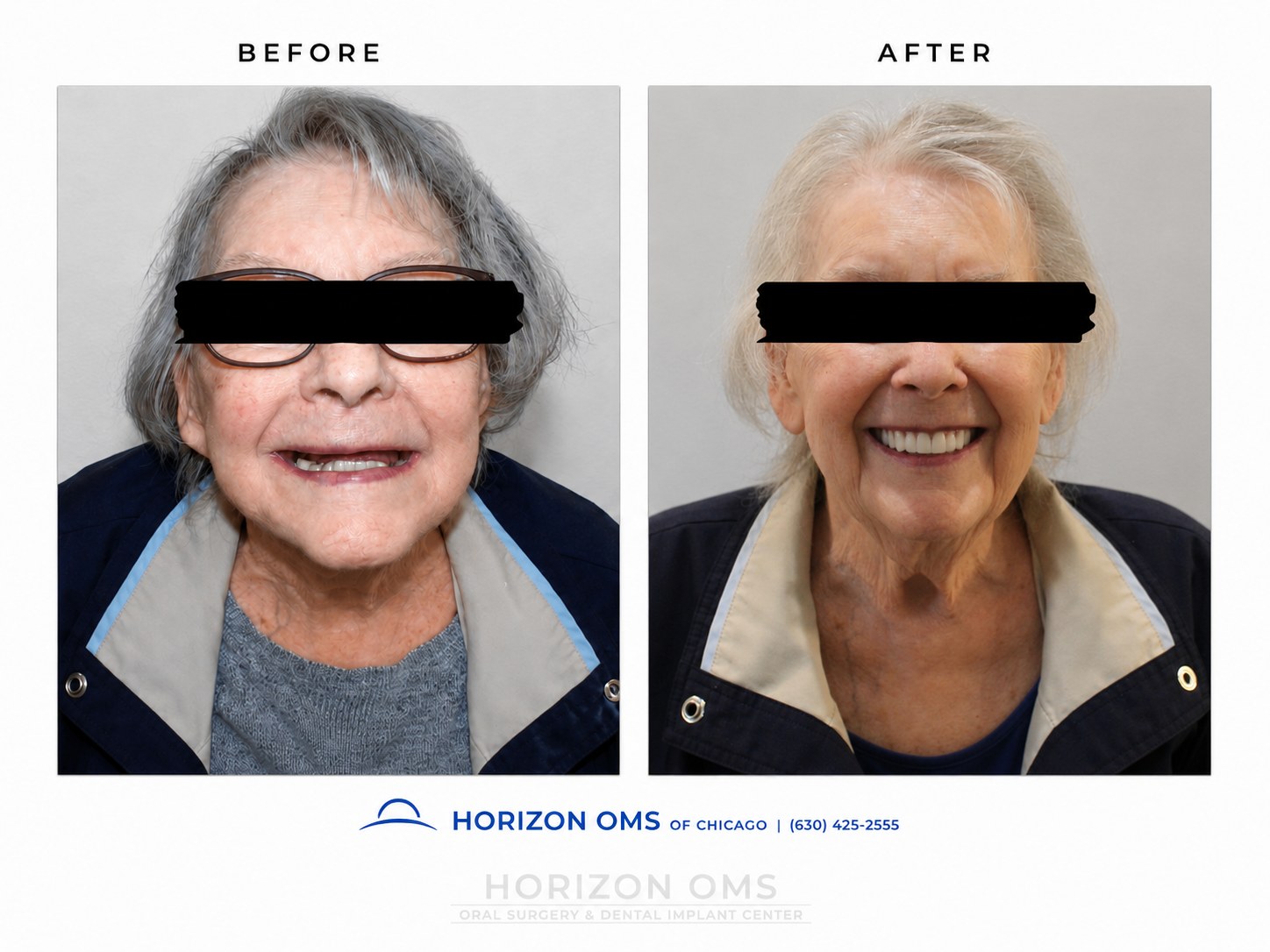
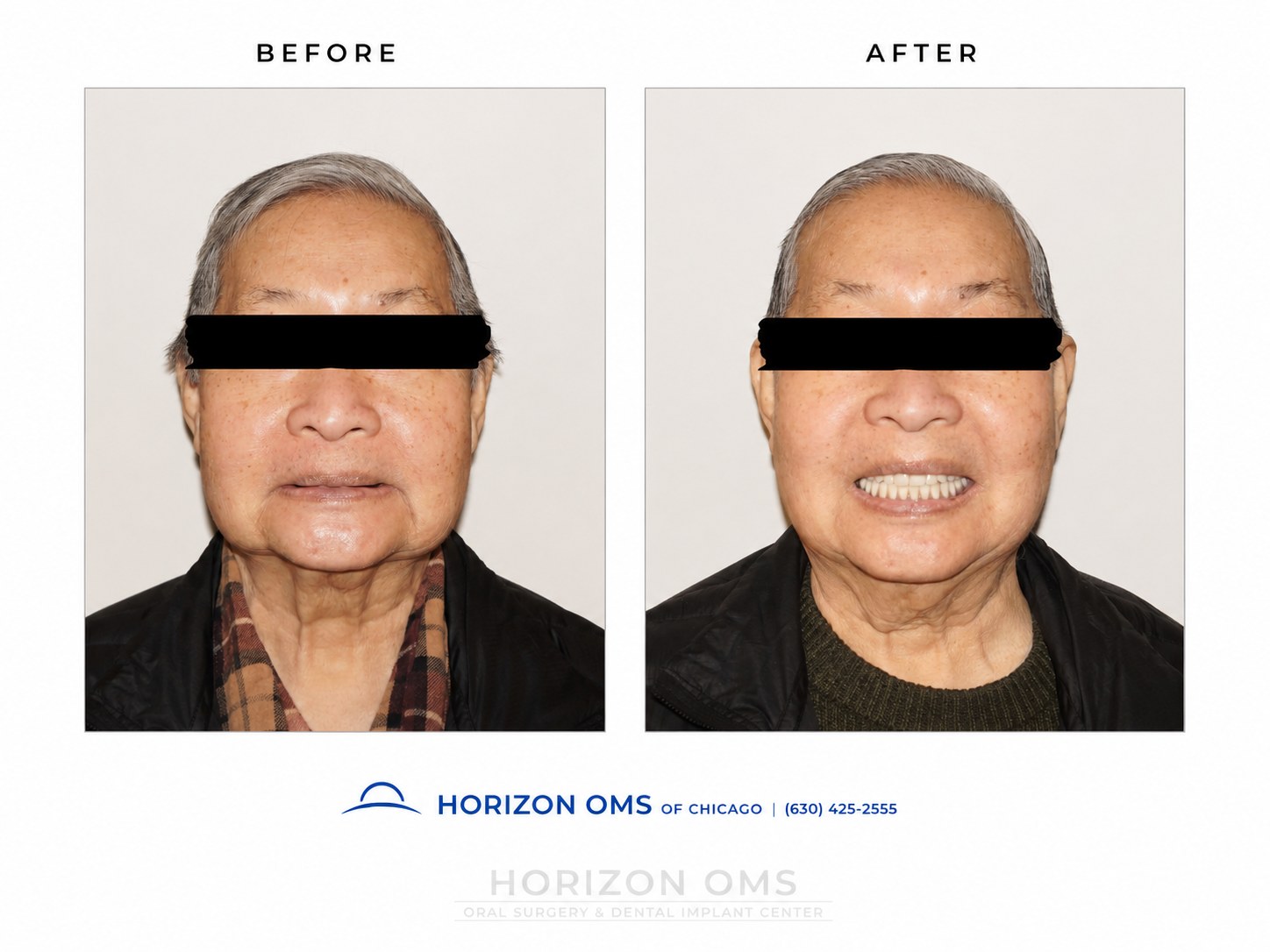
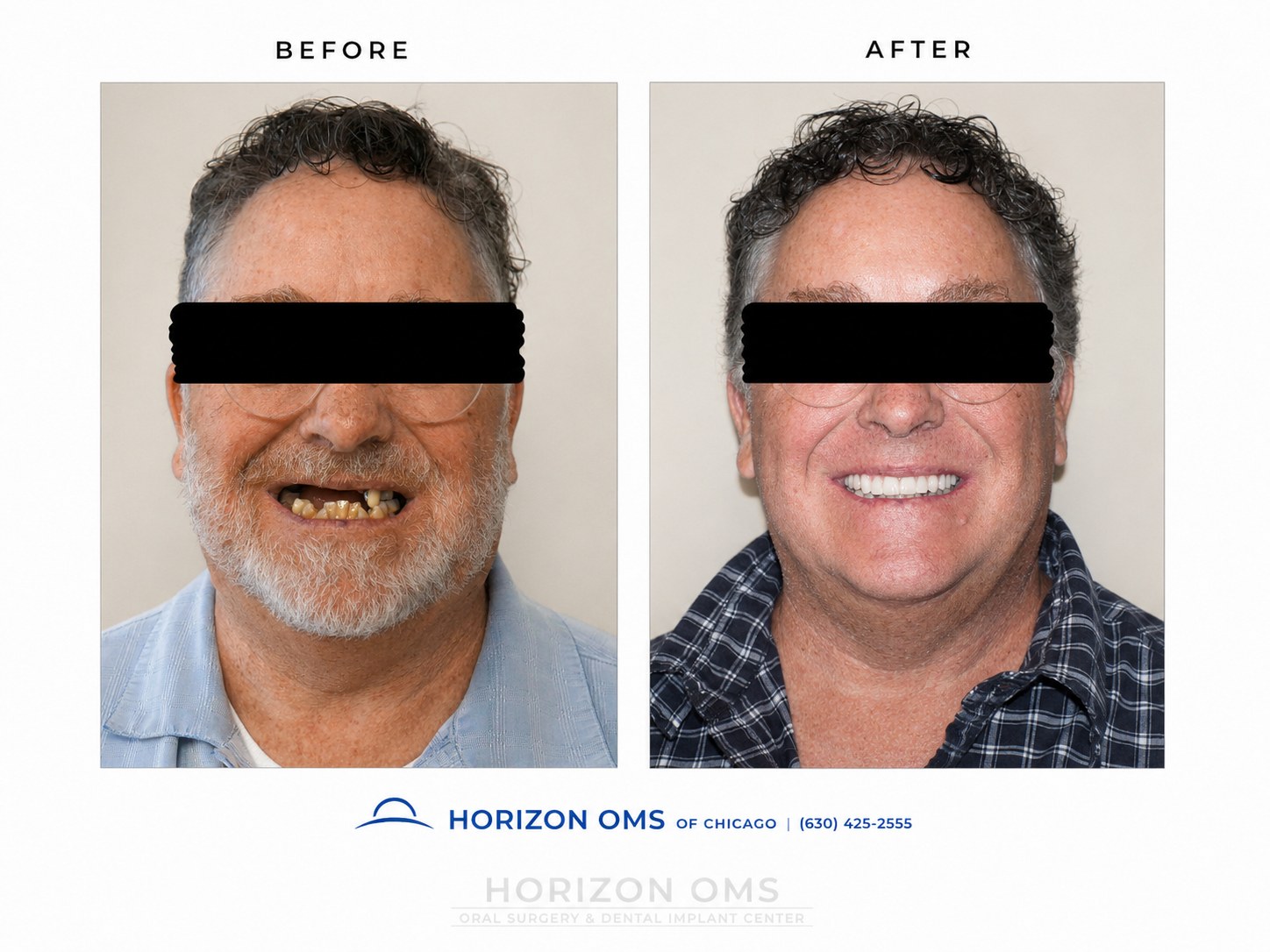
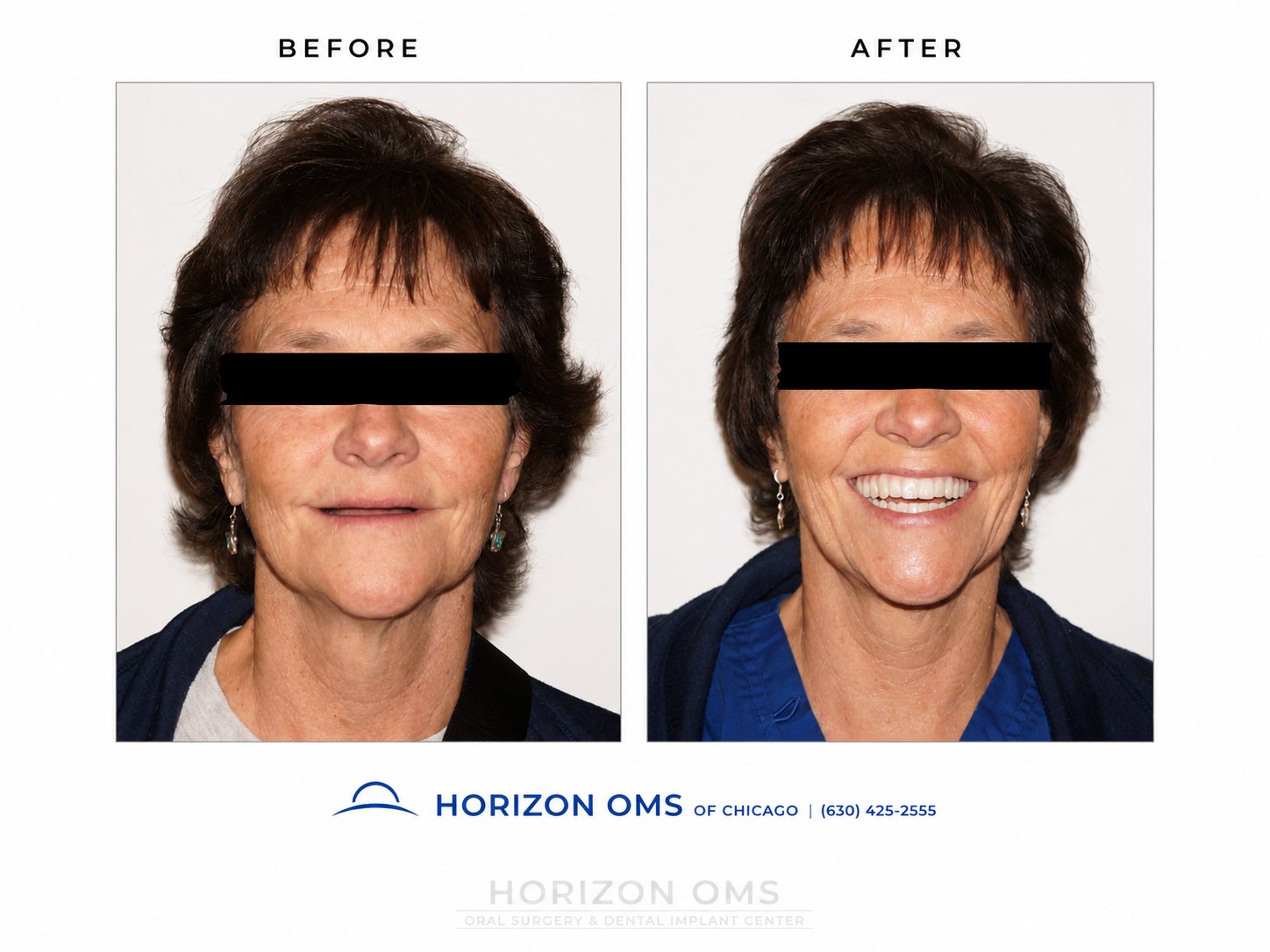
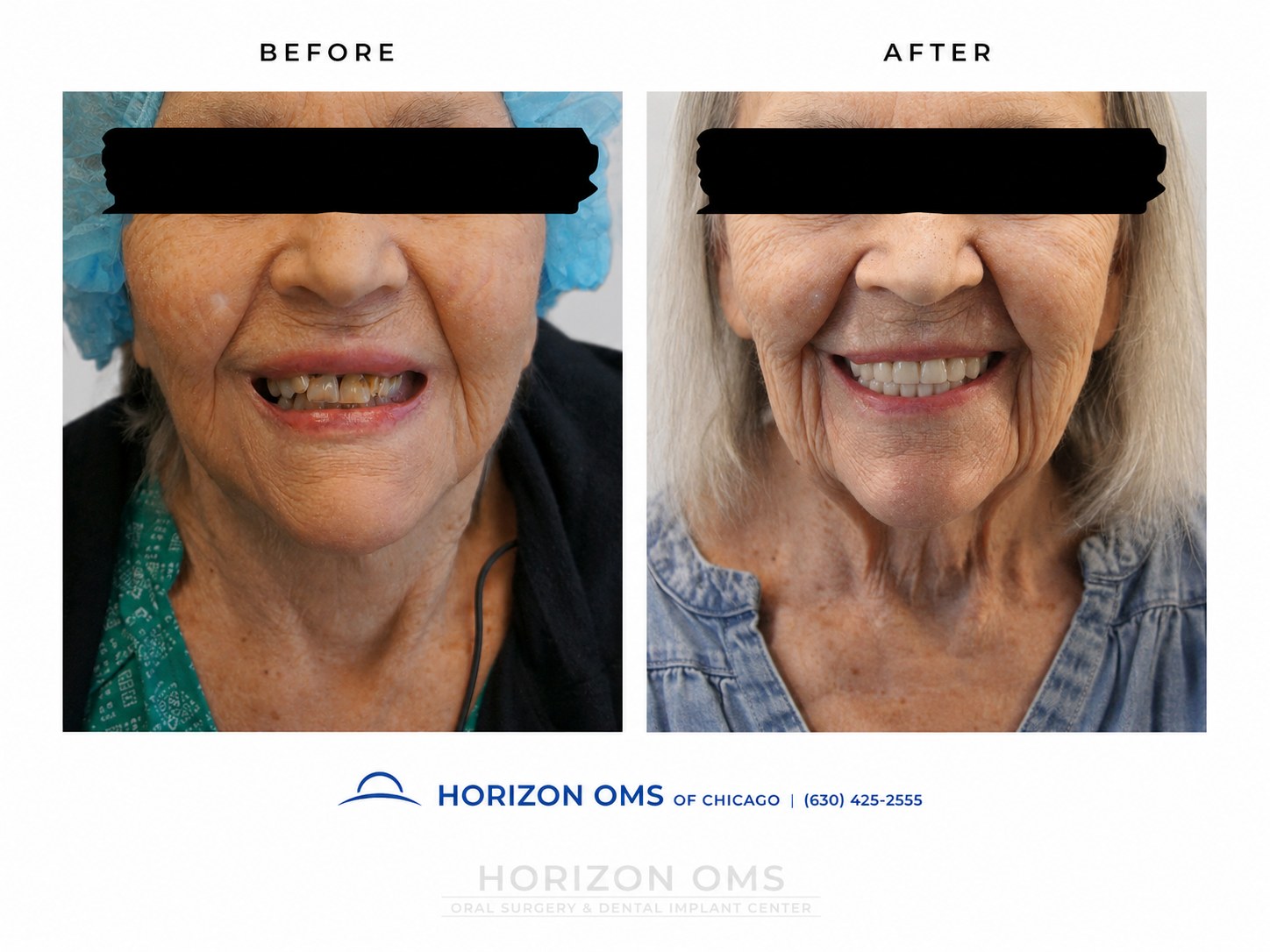
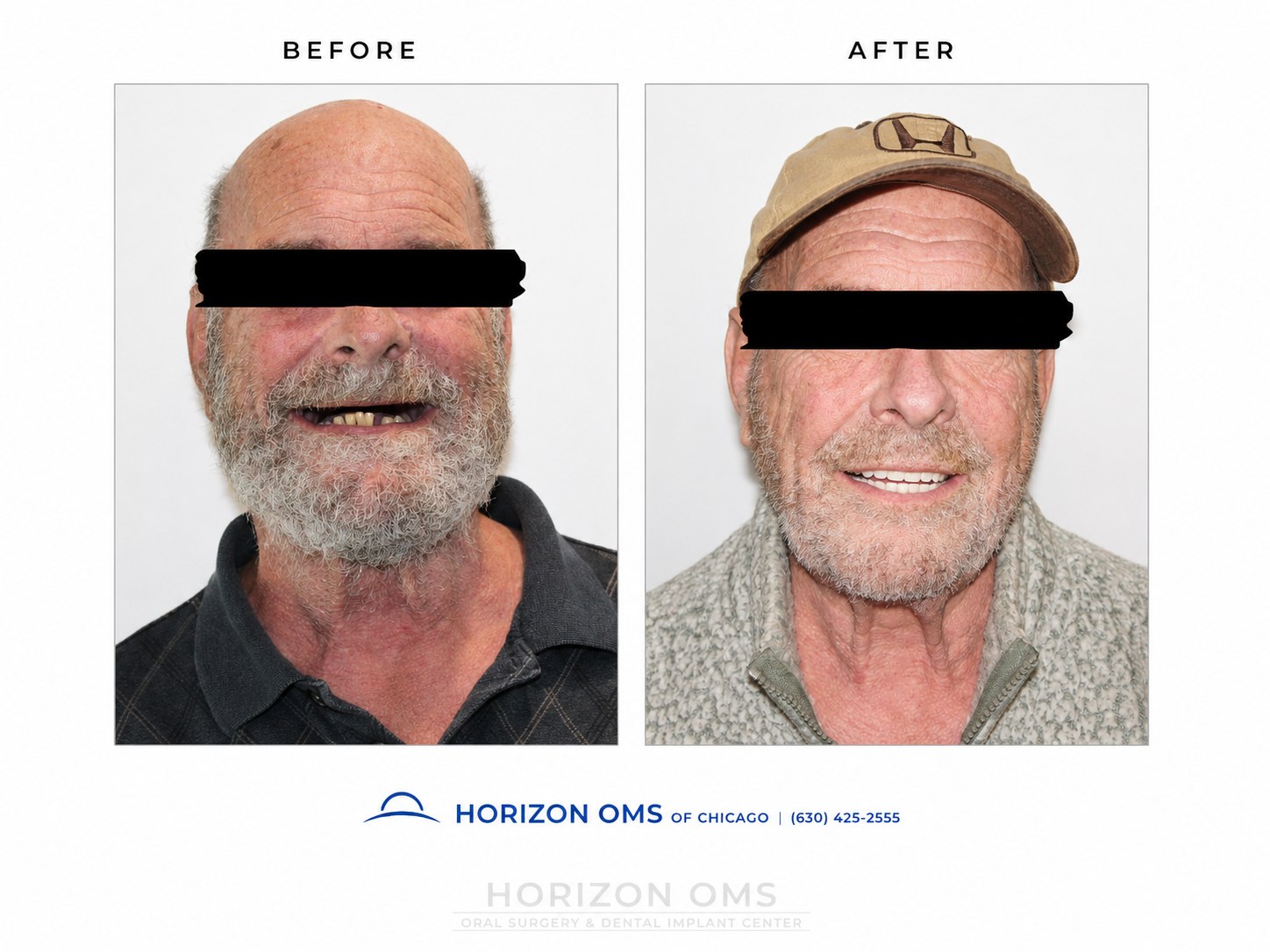
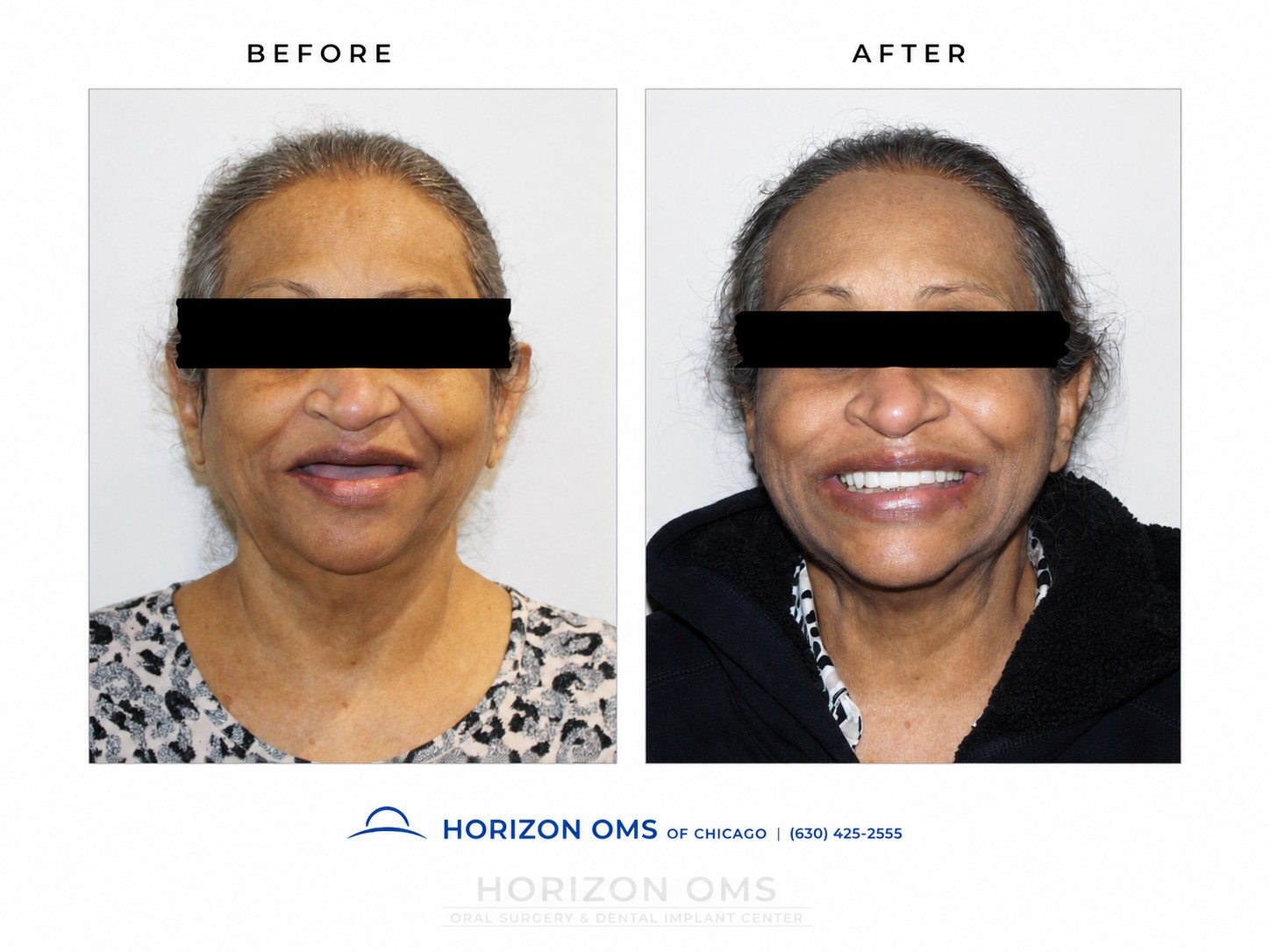
Clinical photos shown with patient consent. Individual results vary.
How full-arch implant treatment is designed
Full-arch surgery is more than “placing four implants.” The implants have to support the final teeth, protect important anatomy, and create a bite that can be maintained over time. We evaluate your case in 3D and plan around:
- Bone volume in the front and back of the jaw
- Sinus position, nerve position, and areas of prior bone loss
- Lip support, smile line, speech space, and tooth display
- Whether immediate teeth are realistic or staged healing is safer
- Hygiene access under the future bridge
Typical treatment sequence
- Consultation and 3D imaging: We review your teeth, bone, bite, restorative goals, health history, and anesthesia options.
- Restorative coordination: Your restoring dentist and our surgical team confirm the bridge design, bite position, and timeline.
- Surgical visit: Teeth are removed if needed, implants are placed, and bone shaping or grafting is completed when indicated.
- Healing phase: You follow a controlled soft diet while the implants integrate and swelling settles.
- Final restoration: Your dentist refines the final bridge once the implants are stable and the bite can be adjusted precisely.
- Maintenance: Long-term cleanings, hygiene tools, and bite checks help protect the implants and bridge.
Planning & coordination with your restoring dentist
All‑on‑X succeeds when surgery and restoration are planned together. We coordinate with your restoring dentist to confirm bite position, aesthetics, and the type of final teeth. We’ll review whether tooth replacement should be a fixed implant bridge or a removable option such as an implant-supported overdenture—or, in select cases, whether no replacement is appropriate—based on your anatomy, goals, hygiene needs, and clinical needs.
What happens on surgery day?
- 3D imaging and surgical planning to protect nerves and sinus anatomy
- Implant placement with attention to stability and long‑term support
- When appropriate, placement of a temporary fixed bridge coordinated with your dentist
Bone, sinus, and biologics
Many full‑arch cases involve bone loss. Depending on your anatomy, treatment may include bone grafting and/or a Sinus Lift in the upper jaw. In select severe upper‑jaw cases, we may discuss remote anchorage options such as zygomatic or pterygoid implants. We may also use PRF (Platelet‑Rich Fibrin) to support comfort and early healing after extractions and grafting.
Anesthesia options
We provide appropriate and comfortable anesthesia, whether that includes office‑based IV sedation, nitrous oxide (laughing gas), or local anesthetic, based on your needs and the complexity of the procedure.
Timing: “same‑day teeth” vs staged treatment
Some patients are candidates for a temporary fixed bridge soon after surgery, while others benefit from a staged approach (healing and bone maturation first). We’ll explain what’s realistic for your case and coordinate timing with your dentist.
Temporary bridge vs final teeth
If you receive teeth the same day, that first bridge is a healing bridge—not the final version. It is designed to protect the implants while the bone heals. Final teeth are usually made after healing, when the bite, gum contours, speech, and bridge shape can be refined more accurately.
What makes a case more complex?
Some full-arch cases require additional planning because of severe bone loss, sinus anatomy, prior implant failure, heavy bite forces, grinding, a high smile line, medical risk factors, or a need for advanced anchorage such as pterygoid or zygomatic implants. The goal is not just to place implants—it is to create a stable foundation that your dentist can restore and maintain.
Long-term maintenance
Full-arch implant teeth are fixed, but they still require daily cleaning and routine professional maintenance. We review hygiene access, water flosser and brush techniques, bite protection when appropriate, and follow-up timing with your dentist. Protecting the bridge is a team effort between the patient, surgeon, and restorative dentist.
Cases from Our Practice
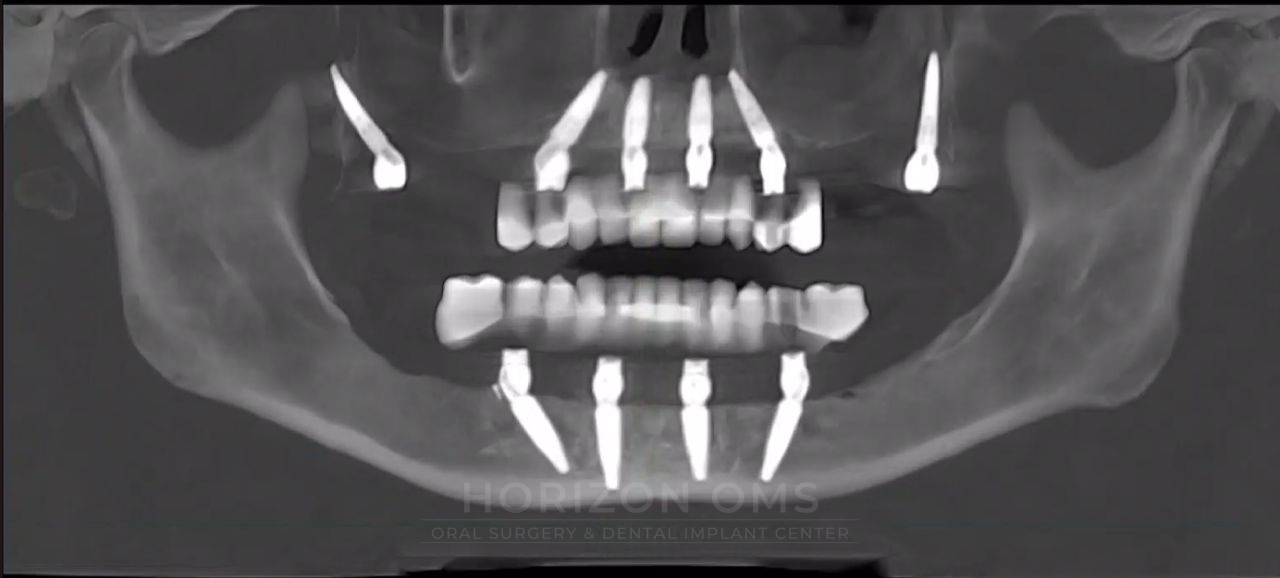
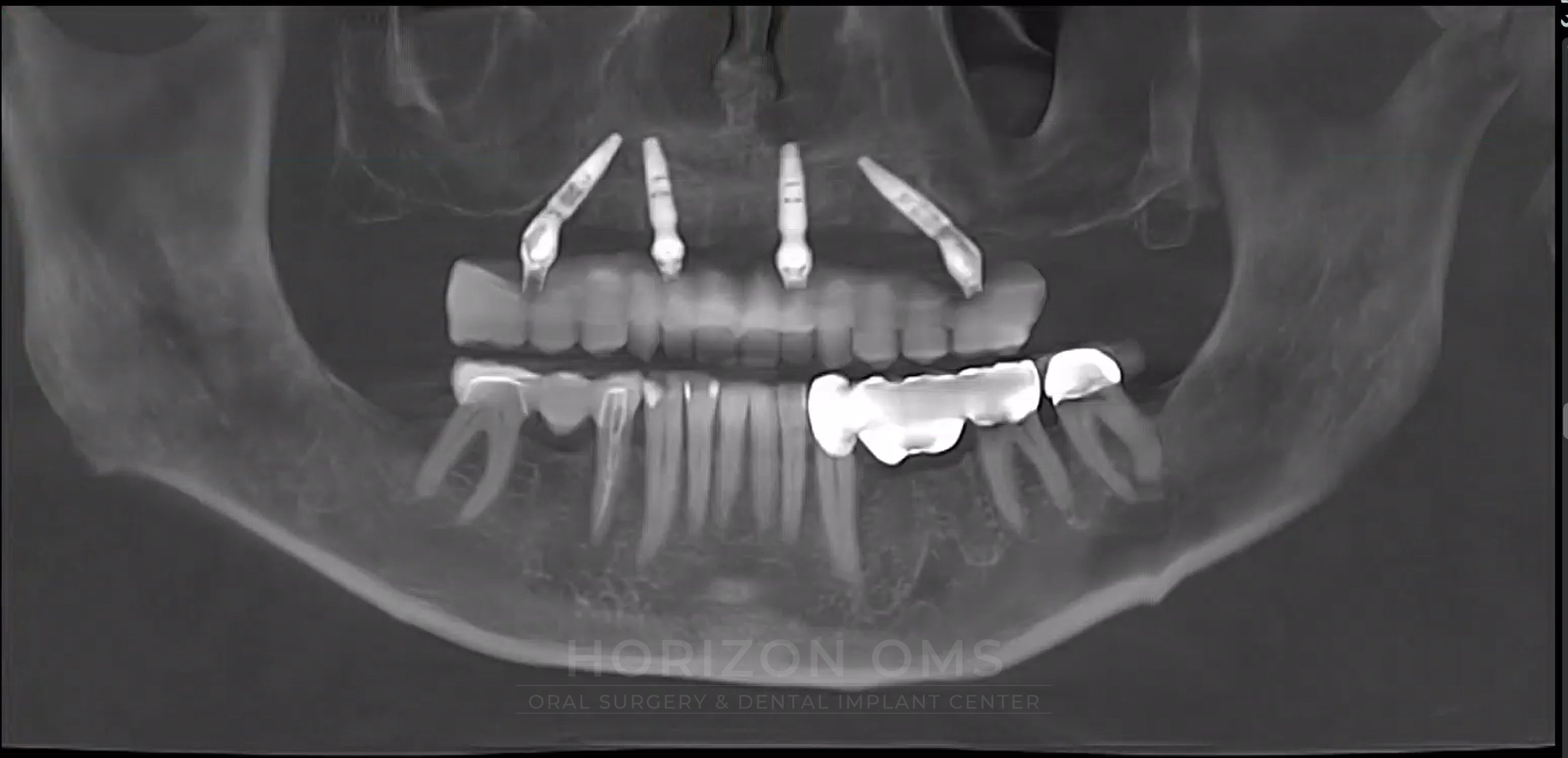
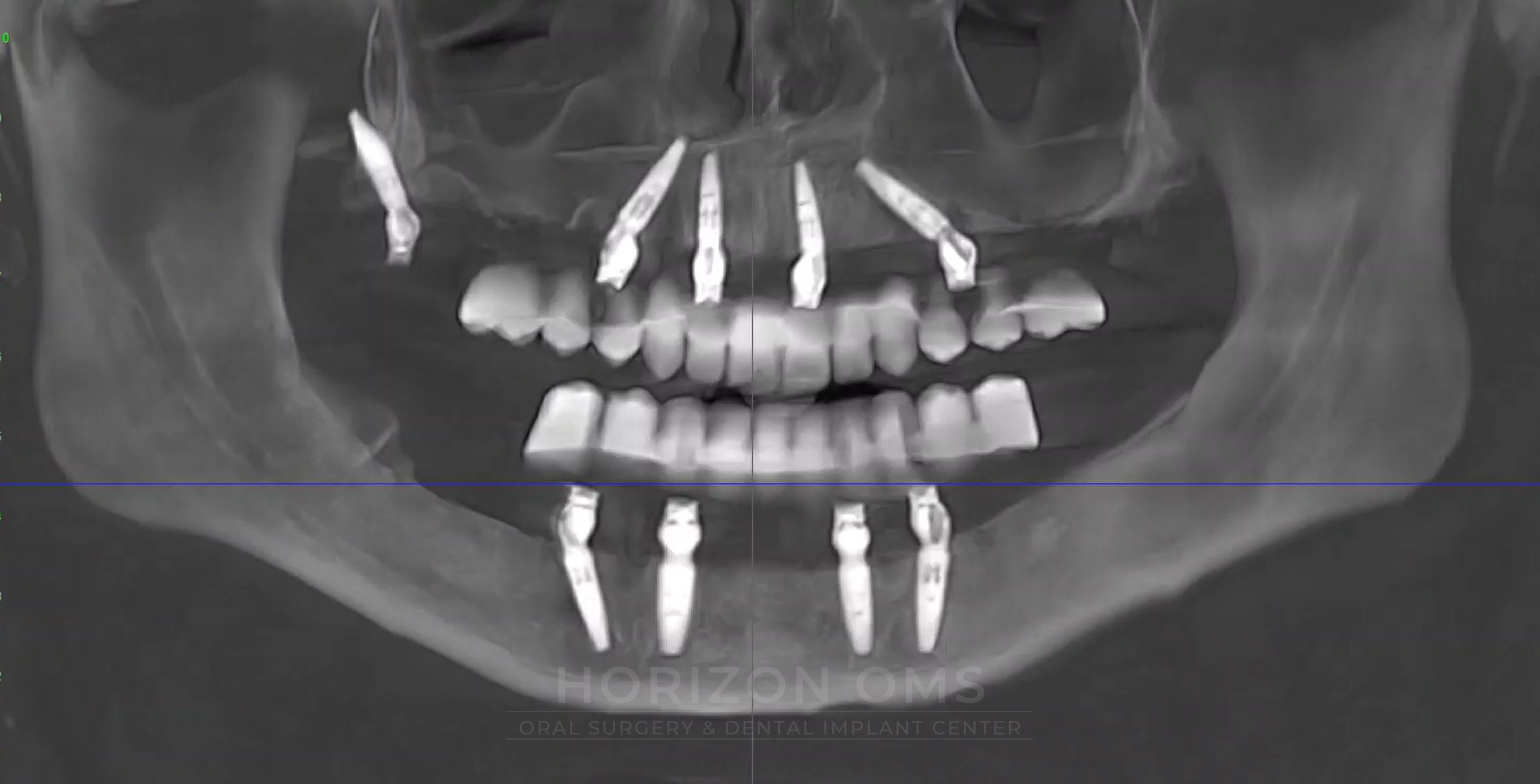
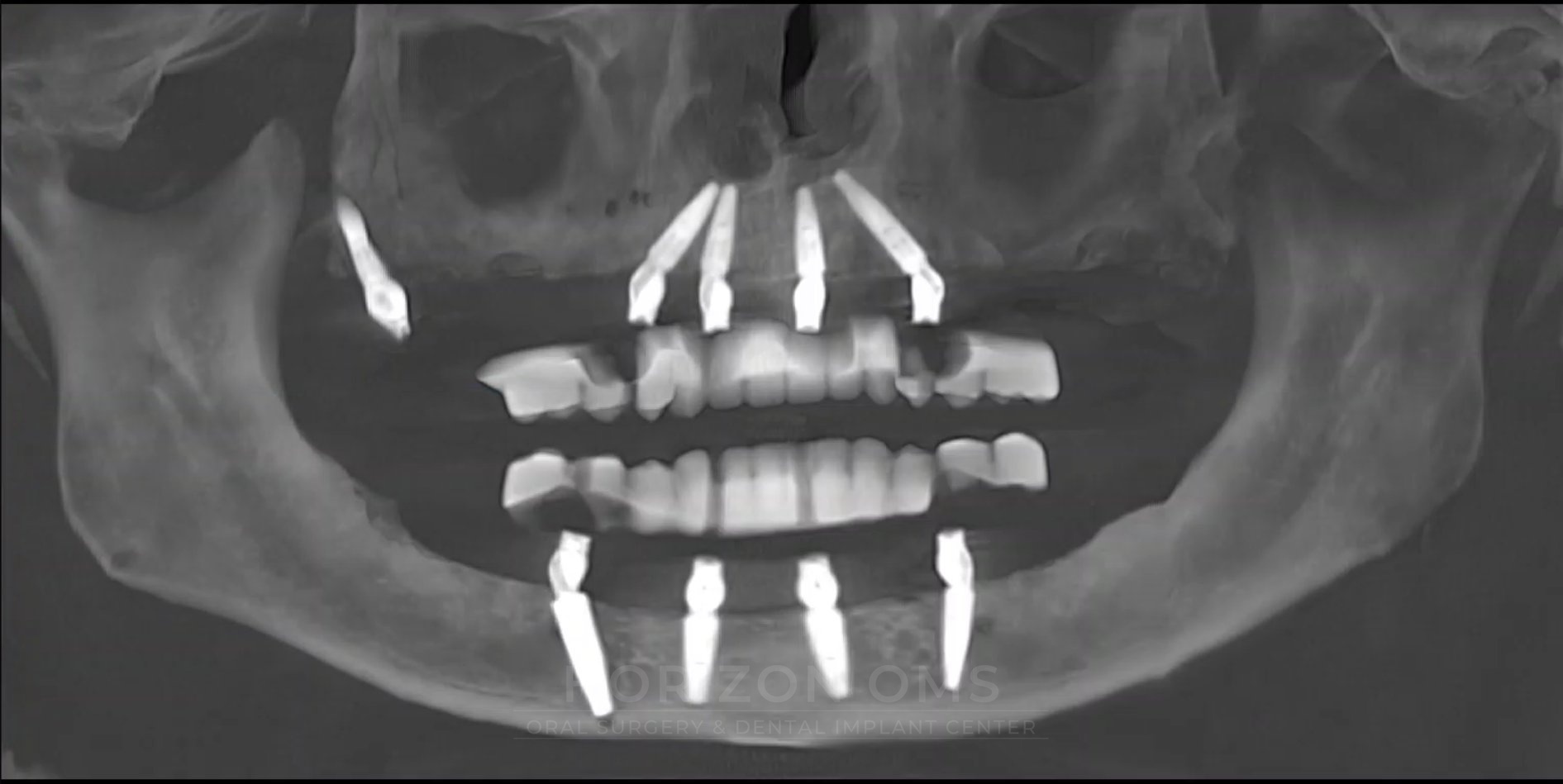
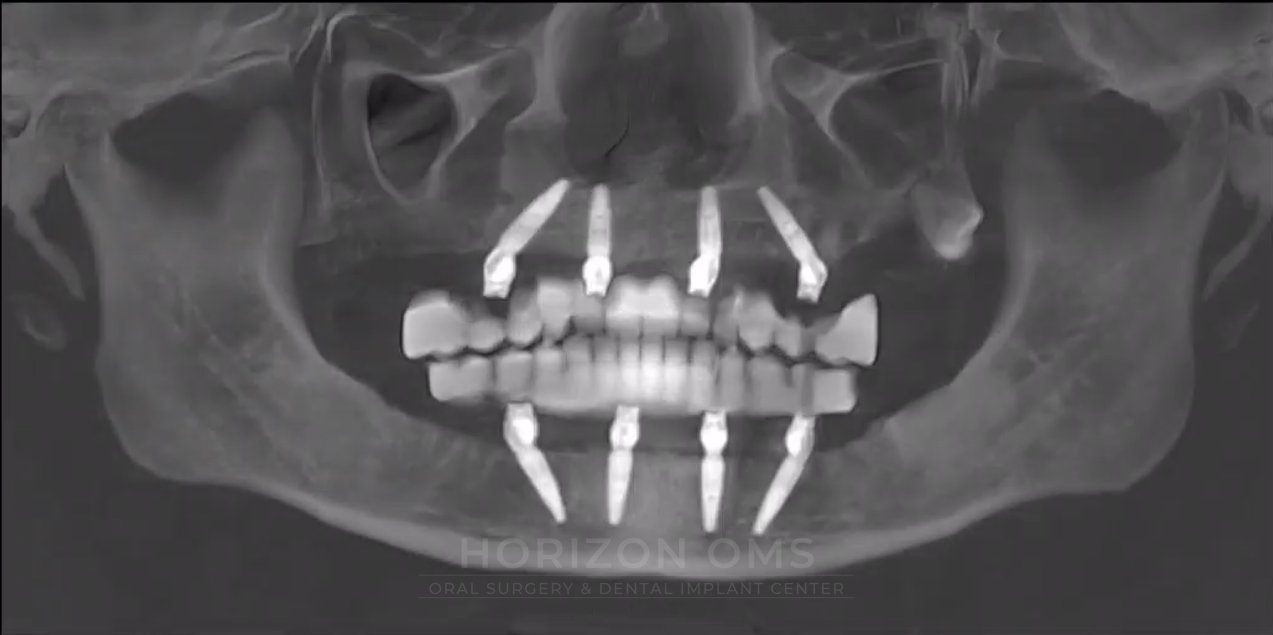
Replacement of severely decayed teeth in both jaws with All-on-X implants, including pterygoid implants on both sides — utilized here due to compromised anatomy and medical factors requiring additional anchorage beyond standard implant positions.
Replacement of failing upper dentition using a full-arch implant-supported prosthesis, with strategic implant positioning to work around areas of bone loss.
Comprehensive full-arch restoration of both upper and lower jaws, with implants placed to establish a stable, fixed prosthetic foundation.
Full-arch upper jaw restoration utilizing pterygoid implants for posterior anchorage in dense bone, avoiding sinus augmentation and reducing overall treatment time.
Replacement of all missing and severely worn teeth with a full-arch implant-supported prosthesis. The patient was sent home the same day with fully functioning fixed teeth.
All cases personally treated by Dr. Ali Al-Qudsi, board-certified oral and maxillofacial surgeon. 3D CBCT imaging shown.
Important: Outcomes depend on anatomy, healing, oral hygiene, and restorative execution. We’ll review alternatives—including denture options and no treatment—so you can make an informed decision.
Download: All-on-X recovery guide (PDF).